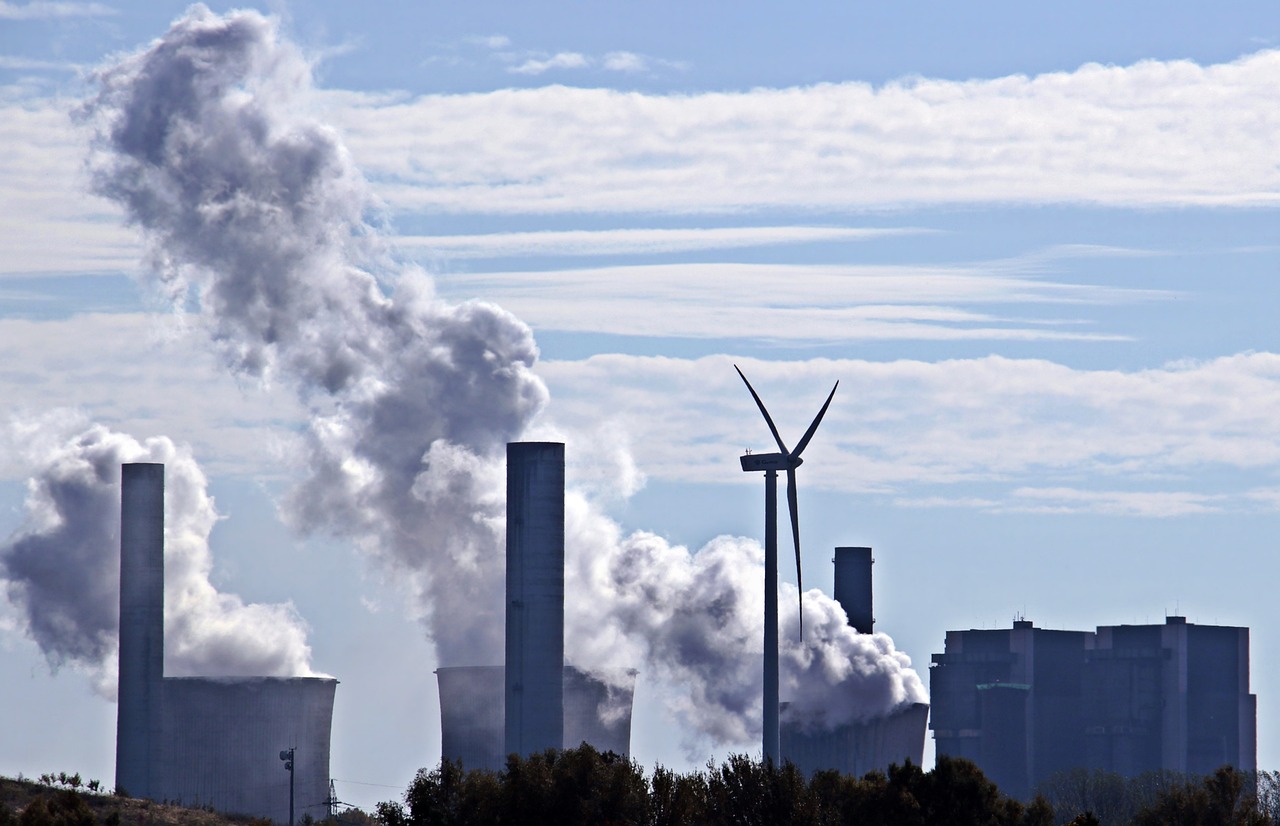
Resources is a source or supply from which benefit is produced. A natural resource is replaced by natural process. Renewable resources is a resources that capable of natural regeneration within a time span relevant to human e.g. – freshwater,soil, plant and animals,clean air. Non-renewable resources – available only in limited quantities or their rate of … Read More “Natural Resources” »

Author: Janith Piumal
Population is the group of organisms of same species living in in the particular habitat. forces that controlling the growth of a population are biotic potential (ability to reproduce at given rate and inherent the characteristic of a populations), environmental resistance (opposite to the growth (limited resources, pest, predators). Limiting factors population growth will be … Read More “Population” »
Evolution is the natural process of irreversible changes producing new forms with adaptive improvements. Cosmological evolution Chemical evolution Biological evolution Cultural evolution Cosmological evolution Cosmological evolution is explained by the big bang theory. 13.8 billion years ago created all the matters in the universe. Initially only protons and the neutrons, later 99% helium and hydrogen … Read More “Evolution” »
The Environment science is branch of science concerned with relation between organisms and their environment. it is a applied science that gives understanding of the nature of the problem and the helps ways to seek the solutions. It is a multidisciplinary approach including biology, chemistry,geology, physics, etc. Ecological principles of the environmental science. 1. Every … Read More “Introduction to Environment science” »
Gene cloning is a process in which multiple copies of genetic material, such as genes, are created. To do this, scientists utilize vectors – specific strands of DNA that can be inserted into cells and transport the desired genes with them. Through gene cloning, researchers have been able to gain valuable insight into genetics and … Read More “Vectors for Gene Cloning” »
Performing a restriction digest in the laboratory Digest a sample of λ DNA (concentration 125 μg ml−1) with HindIII DNA – The amount of DNA required for restriction digestion varies depending on the experiment and its desired results. – To digest 2 μg of λ DNA -16 μl of the DNA sample is needed Buffer … Read More “Manipulation of Purified DNA” »
Ti-plasmid are widely utilized to introduce DNA into plant cells. but natural form of Ti plasmids are not suitable for as cloning vector because The size of the Ti plasmids is 150kb-200kb, it is extremely difficult to manipulation. Binary vector Consist a helper plasmid and a donor plasmid. Helper plasmid (binary cloning vector)contains disarmed Ti … Read More “Plasmid Vectors for plant cells” »
Recombinant DNA Technology is the process that isolation and manipulation of DNA sequences. it involves cutting, combining of DNA from different sources and create new DNA combination/genes. Gene Cloning Gene cloning is the process of generation of genetically identical copy of cell or an organism. A fragment of DNA, that gene of interest on cloning … Read More “Recombinant DNA Technology” »
############view first six rows of dataset############### Output: Output:
Output: According to this petal length and petal width, sepal length and petal length , Sepal length, and petal width are highly correlated. This leads to multicollinearity. This issue can be reduce using PCA analysis. Now there is no correlation between multiple variables therefore there is no multicollinearity issue. Output: BIPLOT is useful to understand what is … Read More “Principal component analysis (PCA) in R studio” »