Evolution is the natural process of irreversible changes producing new forms with adaptive improvements.
- Cosmological evolution
- Chemical evolution
- Biological evolution
- Cultural evolution
Cosmological evolution
Cosmological evolution is explained by the big bang theory.
- 13.8 billion years ago created all the matters in the universe.
- Initially only protons and the neutrons, later 99% helium and hydrogen and there is no heavy elements
- Clouds of helium and the hydrogen is combined into planets as the universe is cooled and explained.
- Solar system and the earth was formed 4.6 billion years ago.
- At early there is no atmosphere, initial atmosphere was formed by the gases formed from the volcanic activities, and gravity formed blanket to gases CO2,H2O,N2,H2S
- Then the rain initiation and cool down the earth formed the ocean
Chemical evolution – Production of the organic compounds. proceeded with the cosmological evolution.
Biological evolution – life began 3.8 billion years ago, 2.8 billion years ago free oxygen accumulated. Changes in the gene frequency in a population over time.for 160 million years dinosaurs dominated, then mammals are dominated.
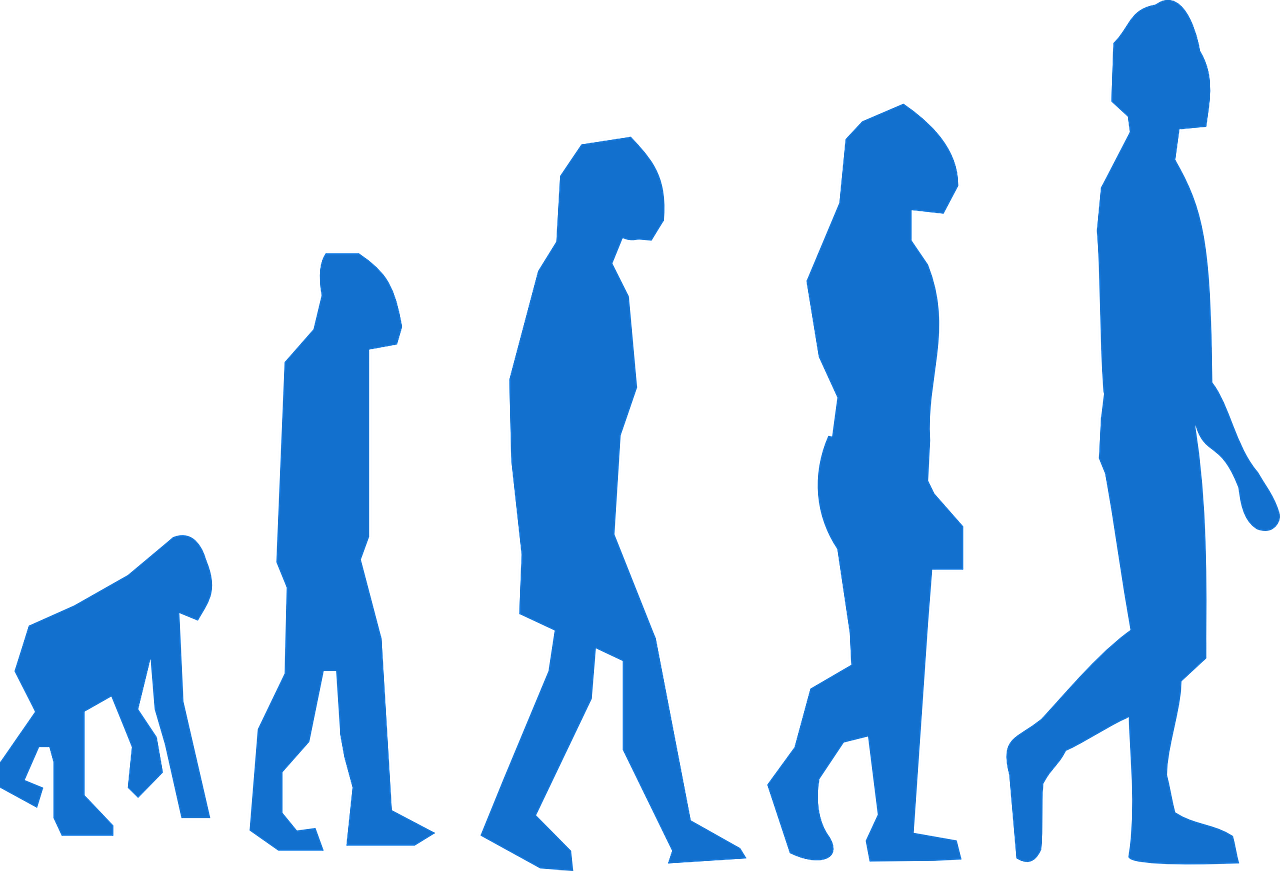
Human evolution
for stages of the human evolution
- Australopithecus – forest dwellers
- Homo habilis – use tools, gathering food, occasionally hunting, scavenging
- Homo erectus – control fire, hunting, complex tools,developed clothing. travelled out of africa.
- Homo sapiens – domestication, agriculture, civilization,industrialization, use of chemicals, exponential growth of population.
Cultural evolution
- Agricultural revolution
- Industrial revolution
- Electronic revolution
Natural ecosystems Vs Human ecosystems
Natural ecosystems refer as interconnected network of biotic and abiotic components, not a human innovation. these ecosystems are self sustaining, self – organizing, self regulating and evolve. such as oceans, forest, rivers…
Human ecosystems are human built environments. such as town, city, village, civilization…
| Natural ecosystems | Human ecosystems |
| built by natural processes without human involvements | built by human |
| High level of diversity | low level of diversity |
| self regulating and resilient to disturbances | manage by human, vulnerable to disturbances |
| Function – air and water purification, climate regulation, nutrient cycle. | provide food, energy, transportation |
| low pollution level | High pollution level |
| Forests, deserts, oceans… | Farms, gardens, cities… |
References
- https://skyandtelescope.org/astronomy-resources/how-did-the-universe-begin-happened-big-bang/
- Accelerating expansion of the universe – Wikipedia. (2017, February 21). Accelerating Expansion of the Universe – Wikipedia. https://en.wikipedia.org/wiki/Accelerating_expansion_of_the_universe