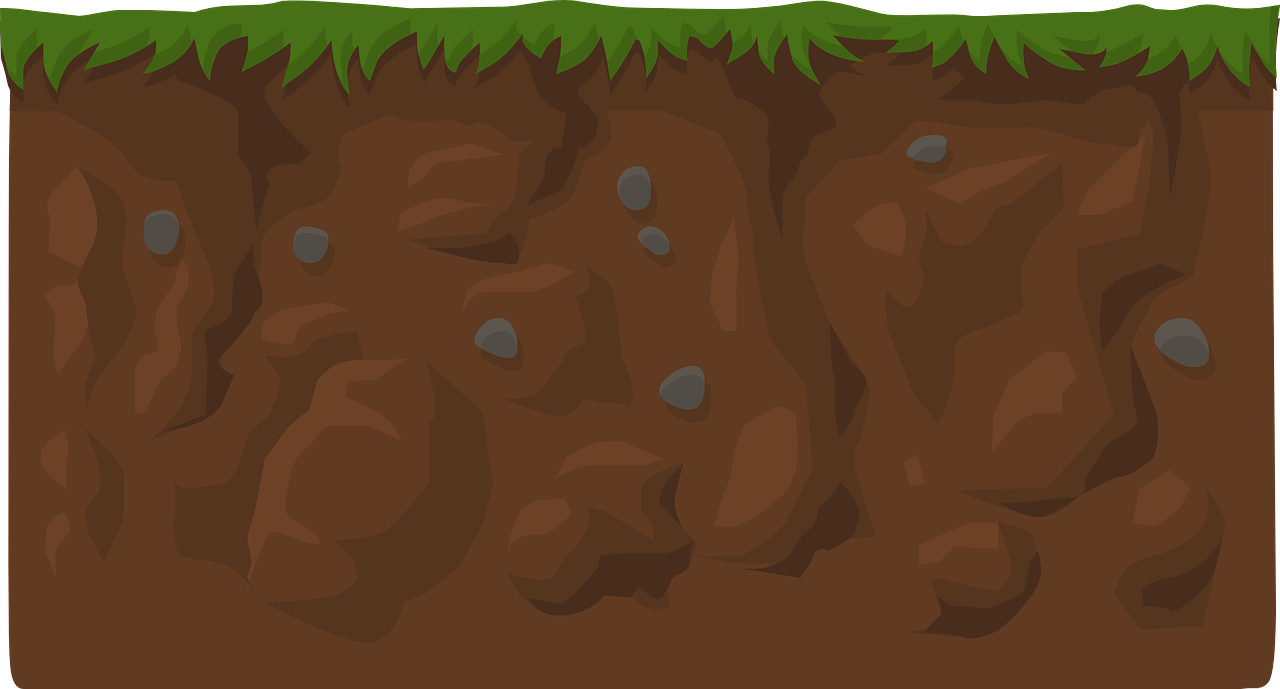
Soil definition: Naturally weathered part of the earth, including organic matters affect on plant growth and plant performances.
Soil genesis
Soil is generated from the mother rocks and further developed from the natural and anthropogenic activities.
Five major factors influencing soil formation
- Type of rock
- Climate
- Topography
- Organisms
- Time
Soil formation comprises of two different stages
- Changes of the consolidated mass to development of the loose (unconsolidated) layer.
- when the time pass changes occurs in the loose layer (development of soil.)
Mainly involved two processes
- Destructive process – mainly there are two types, physical process, biological process)
- Synthetic process – Formation of the new materials.
Soil profile
Vertical section of the soil revealing the different horizons.
source – Soil horizon – Wikipedia. (2022, November 21). Soil Horizon – Wikipedia. https://en.wikipedia.org/wiki/Soil_horizon
- O – horizon – top organic layer, contains leaf litters and humus, no weathered minerals
- A horizon (Top soil) – Enrich with organic materials, and contains large amount of nutrients soil in this layer is leaching into horizon below. This soil is more recommended for the crop cultivations.
- B – horizon (sub soil) – contains less organic matters and humus, lies below the usual dept of tillage. Poor drainage in the subsoil resulting water logged condition in the topsoil.
- C – horizon – contains unweathered rock.
- R – horizon – The weathered rock layer.
Soil physical properties are Texture, Structure and the Porosity
Soil Texture
Soil texture is the proportion of sand, silt, clay in soil. Soil texture is identified by the Soil triangle.
Sand VS Silt VS Clay
| Sand | Silt | Clay |
| Large enough to be seen by naked eye | Microscopic (Intermediated between sand and silts) | Microscopic |
| Low water holding capacity | higher than the sands | Higher water holding capacity. |
| Large space between the particles (good drainage and rapid air, water flow) | Adhering film of clay (give same plasticity, cohesion, adsorption) | Very low space between the particles (more plasticity and cohesion) |
Loams – Balance mixture of coarse and fine particles of sand, silts and clay and sufficient amount organic matters.
Soil structure
Soil particles are binds together and form a cluster. also call as aggregation. Good soil structure is important for the increasing the stability against the erosion, maintain the soil fertility, porosity and soil water(soil solution) movements
References
- Soil horizon – Wikipedia. (2022, November 21). Soil Horizon – Wikipedia. https://en.wikipedia.org/wiki/Soil_horizon
- 16.2A: Soil Composition. (2018, July 1). Biology LibreTexts. https://bio.libretexts.org/Bookshelves/Microbiology/Microbiology_(Boundless)/16%3A_Microbial_Ecology/16.02%3A_Soil_and_Plant_Microbiology/16.2A%3A_Soil_Composition
- File:SoilTextureTriangle.svg – Wikipedia. (1993, January 1). File:SoilTextureTriangle.svg – Wikipedia. https://en.wikipedia.org/wiki/File:SoilTextureTriangle.svg